

 In a recent front-page story, titled Density as a good thing, The Oregonian presents us with some provocative quotes about the goodness of increased urban density. We are told by a city of Portland senior planner that “Cradle to grave is the new goal.” In other words, the goal is for denizens of the city to live and die in Portland – hopefully without a car. As one Portland planning commissioner says, “It becomes a place where you don’t have to get in a car every day.”
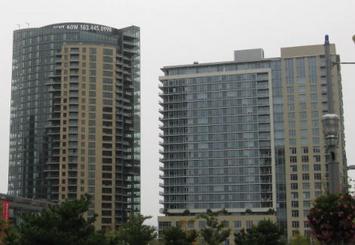 This happy view is not held by everyone. Another city planning commissioner notes that “The problem with that word, ‘density,’ is that people hear it and go ‘Click.’ They just shut down. They don’t want to have the conversation.” In fact, three of the pre-eminent sages of 21st Century urban planning also believe in what I call the “pathology of density.”[i]
 Ian McHarg, the guru of ecological planning, in his book Design With Nature (1969) talks about a “pathological togetherness” whereas “density increases, so do social pressures, which manifest themselves in stress disease…” He says the evolutionary reason for this pathological behavior is that “stress inhibits population growth.” It is nature’s way of fighting increased density. McHarg agrees with Jacobs and concludes that of all the urban stress factors “the single obvious one is not poverty, but density…”
Other academic researchers have investigated this density as pathology hypothesis, and the research supports it. A major nationwide study done by professors from Dublin City University and the University of California,[ii] of some 15,000 individuals in average urbanized-area and metropolitan statistical area populations, finds that:
· “The frequency of interaction with neighbors is lower in high-density census tracts.
· That residents living in dense census tracts have fewer confidants.
· High tract density reduces the number of friends.
· Interactive individuals sacrifice something by locating in dense tracts.
· Membership in hobby-oriented club is less likely [in low-density tracts].
· Group involvement tends to be weaker [in low-density tracts].”
Richard Carson is the former planning director for METRO (the regional government responsible for planning the three-county area of 1.5 million people), was featured in the 2009 documentary “Making Sense of Place Portland” [iv]and is currently is a doctorate student of public policy. He can be reached at his website at www.richcarson.org.